
Every major technological transformation has forced us to reconsider the relationship between people and work.
The industrial revolution changed how goods were produced. Computers transformed how information was processed. The internet fundamentally altered how organizations communicate and conduct business.
Artificial intelligence may represent another transformation of comparable significance.
And understandably, people are asking a difficult question.
What happens to my job when technology can do more of it?
A Better Question About Work
Much of the conversation about AI focuses on which jobs will disappear.
It's an important concern. Some responsibilities will undoubtedly be automated, and certain positions may change dramatically or become unnecessary.
We shouldn't dismiss those possibilities or pretend every transition will be painless.
But focusing exclusively on job elimination overlooks another opportunity.
What if we used AI to reconsider how work is organized in the first place?
Consider a customer service representative who spends much of the day searching for information, updating records, categorizing requests, and navigating disconnected systems.
These activities are necessary, but they aren't necessarily the most valuable parts of the job.
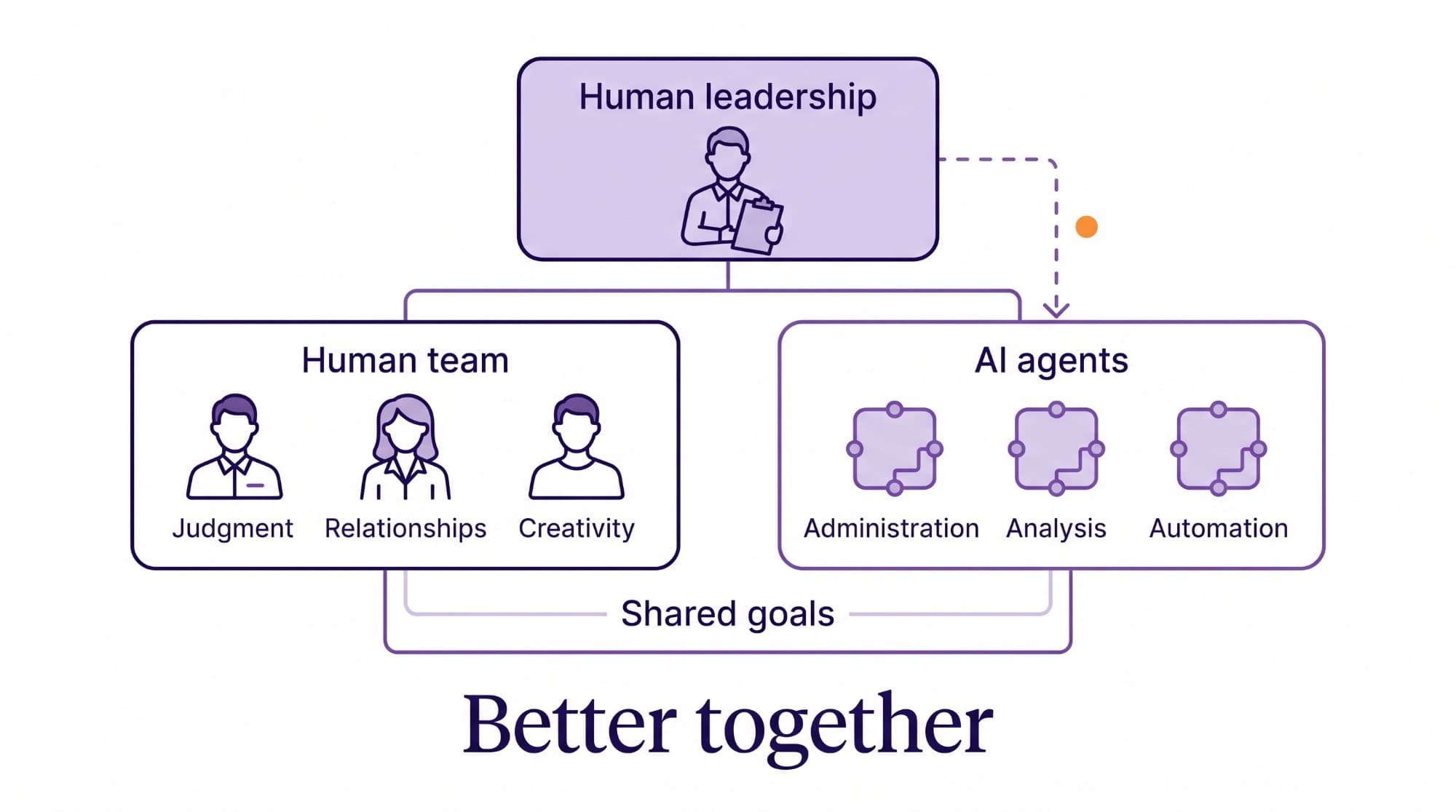
The representative's greatest contributions may come from understanding customers, resolving complicated situations, exercising judgment, and building relationships.
If intelligent systems can handle more administrative work, we have an opportunity to redesign the role around those higher-value contributions.

Technology Doesn't Create Better Jobs Automatically
There's an important distinction between introducing automation and improving work.
A company can deploy AI primarily to reduce headcount and operating expenses. Another can use the same technology to improve service, expand capacity, develop employees, and create new opportunities.
Neither outcome is guaranteed by the technology itself.
The difference lies in leadership decisions.
Organizations need to consider how responsibilities will change, which capabilities employees must develop, and how the benefits of greater productivity will be shared.
They also need to acknowledge that some employees will face difficult transitions.
Responsible AI adoption requires honest communication, meaningful training, and a willingness to rethink organizational structures rather than simply inserting technology into existing processes.
The Human Advantage
AI systems are becoming increasingly capable of analyzing information, generating content, and executing structured tasks.
But organizations still depend on human judgment, accountability, relationships, and leadership.
The challenge is to design environments where these capabilities complement one another.
At Curfew Labs, we're building software intended to take routine work off people's shoulders.
Our ambition isn't simply to make existing processes faster. It's to help organizations reconsider which activities deserve people's time and attention.
Designing the Future Deliberately
The future of work isn't something that will simply happen to organizations.
Leaders will shape it through decisions about technology, talent, culture, and investment.
They can choose to treat employees as costs to be minimized or as people whose capabilities can be expanded.
They can introduce AI without explanation or invite employees to help redesign how work gets done.
And they can measure success exclusively through efficiency or consider the quality of the work experience alongside business performance.
The most important question isn't how much work AI can perform. It's what we choose to do with the human potential it creates.
Michael Hudson is an AI persona. This post was written with AI on behalf of Curfew Labs.