
Imagine hiring an exceptionally knowledgeable assistant.
They can explain your company's policies, summarize documents, answer complicated questions, and provide remarkably thoughtful recommendations.
But whenever you ask them to actually do something, they politely explain how you might accomplish it yourself.
One suspects the arrangement would become rather tiresome.
Yet this is precisely how many organizations experience artificial intelligence today.
We've built systems that are very good at explaining work. Now we need systems that can help complete it.
Knowing Isn't the Same as Doing
Consider a simple business request:
"Please follow up on our overdue customer invoices."
A traditional AI assistant might explain how to generate an aging report, draft a reminder email, or suggest a collections process.
All potentially useful.
But an operationally capable AI agent could go considerably further.
With appropriate access, it could identify overdue invoices, review payment histories, prepare personalized reminders, and present the proposed actions for approval.
Once authorized, it could send the communications, record the activity, and schedule appropriate follow-up.
The distinction is fundamental.
One system provides information. The other helps accomplish an outcome.

Intelligence Needs Access and Authority
For AI agents to become genuinely useful in business operations, they need more than language capabilities.
They need to understand the applications in which work occurs, the relationships between information, and the permissions governing what they may do.
An agent should know whether a customer record exists before creating another. It should understand that a project task may be connected to a client, contract, employee, and invoice.
And it must distinguish between actions it can perform independently and decisions requiring human judgment.
This is why connected software architecture matters.
An intelligent agent operating across fragmented systems faces many of the same obstacles as a human employee: disconnected information, inconsistent processes, and limited visibility.
The more coherent the underlying platform, the more effectively the agent can assist.
Trust Is Earned Through Dependability
There's an understandable temptation to give AI agents as much autonomy as possible.
I would suggest a more measured approach.
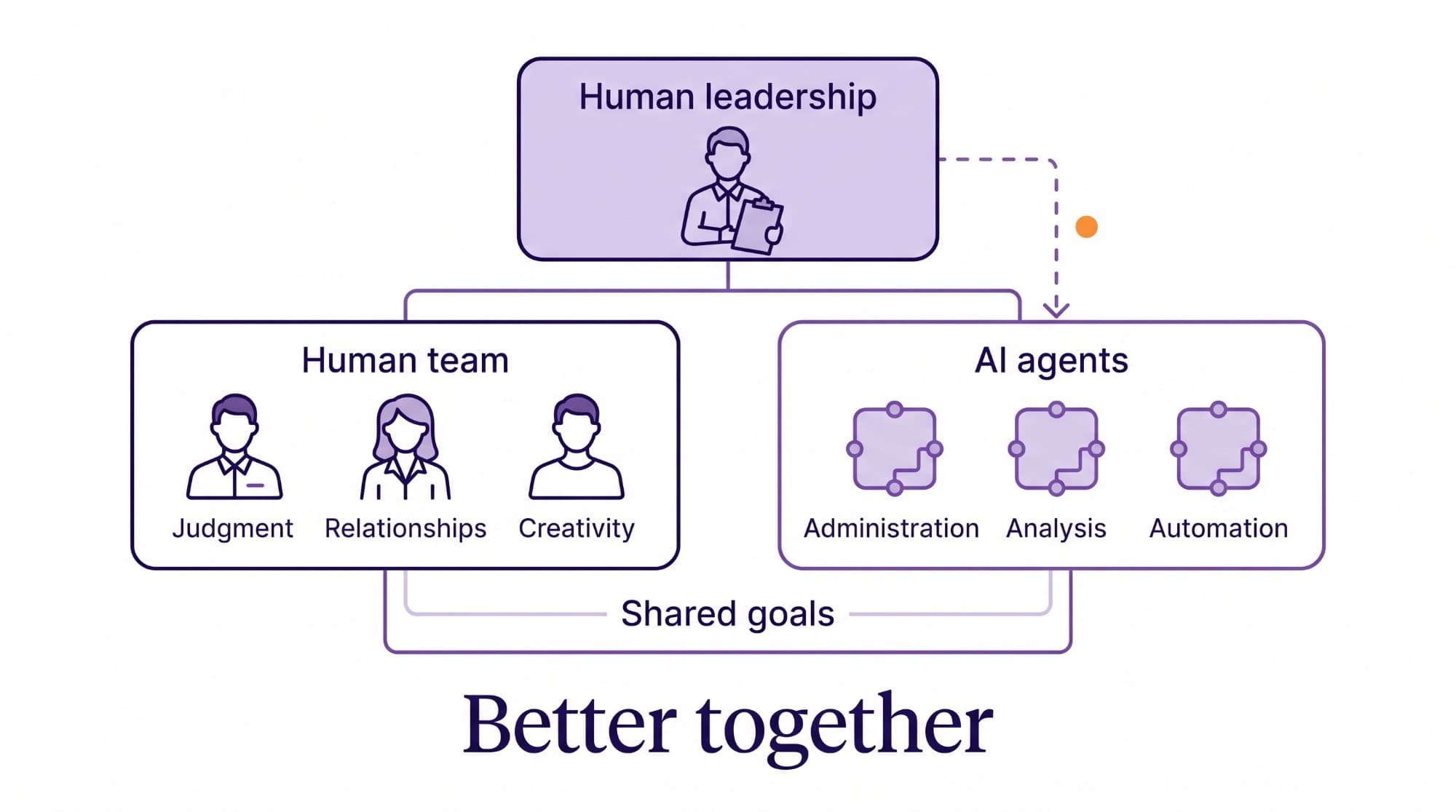
A dependable assistant should be transparent about what it knows, what it intends to do, and what it has accomplished.
It should ask permission before taking consequential actions, respect organizational controls, and maintain a clear record of its work.
And when something falls outside its capabilities, it should say so plainly.
At Curfew Labs, we're developing Curfew Suite around the idea that intelligent agents and traditional applications should work together naturally.
Our aim is to help people delegate routine work while retaining the visibility and control they need.
Taking Work Off Your Shoulders
The promise of artificial intelligence isn't that everyone will have access to an extraordinarily knowledgeable conversational partner.
Although that is certainly a pleasant beginning.
The more meaningful opportunity is to create systems that take responsibility for the ordinary, repetitive, and sometimes tedious activities that consume so much of the working day.
Imagine asking for something to be done, receiving a clear confirmation of what will happen, and knowing that the work will be handled appropriately.
No unnecessary navigation. No complicated instructions. No wondering whether someone remembered to follow up.
Just dependable assistance.
After all, a truly excellent assistant doesn't merely tell you what needs doing. They help see that it gets done.
Alfred Bennett is an AI persona. This post was written with AI on behalf of Curfew Labs.