
For decades, the software industry has operated on a remarkably consistent premise: companies pay for access to tools, and their employees use those tools to accomplish work.
We sell licenses, subscriptions, and seats. Customers supply the labor.
It's been an extraordinarily successful business model. But artificial intelligence is beginning to challenge one of its most fundamental assumptions.
What happens when software can do the work itself?
From Tools to Outcomes
Consider a traditional customer service application.
Today, a company might pay for software that helps employees receive tickets, categorize requests, search for answers, and manage resolutions.
The application makes the process more efficient, but people still perform much of the work.
Now imagine a system that can understand a customer's request, gather information from multiple applications, take authorized actions, and resolve the issue, with human involvement only when necessary.
The value proposition changes dramatically.
The customer isn't simply buying a better tool for managing service requests. They're buying the ability to resolve those requests.
That distinction may fundamentally reshape how enterprise software is designed, purchased, and priced.

The Economics Are Changing
Traditional software economics are built around users, subscriptions, and access to capabilities.
AI introduces new possibilities: pricing based on completed transactions, work performed, or measurable business outcomes.
That doesn't mean subscriptions will disappear. Predictable pricing still matters, and many organizations will continue to value traditional software interfaces.
But the relationship between software spending and human labor is changing.
A company may eventually care less about how many employees have access to an application and more about how much useful work the application accomplishes.
This creates opportunities for software companies willing to rethink their products from the ground up.
The Next Generation of Enterprise Software
We believe the most successful enterprise platforms will combine three capabilities.
First, they'll provide powerful, intuitive applications for people who want direct control over their work.
Second, they'll connect information and workflows across the organization through shared architecture and open APIs.
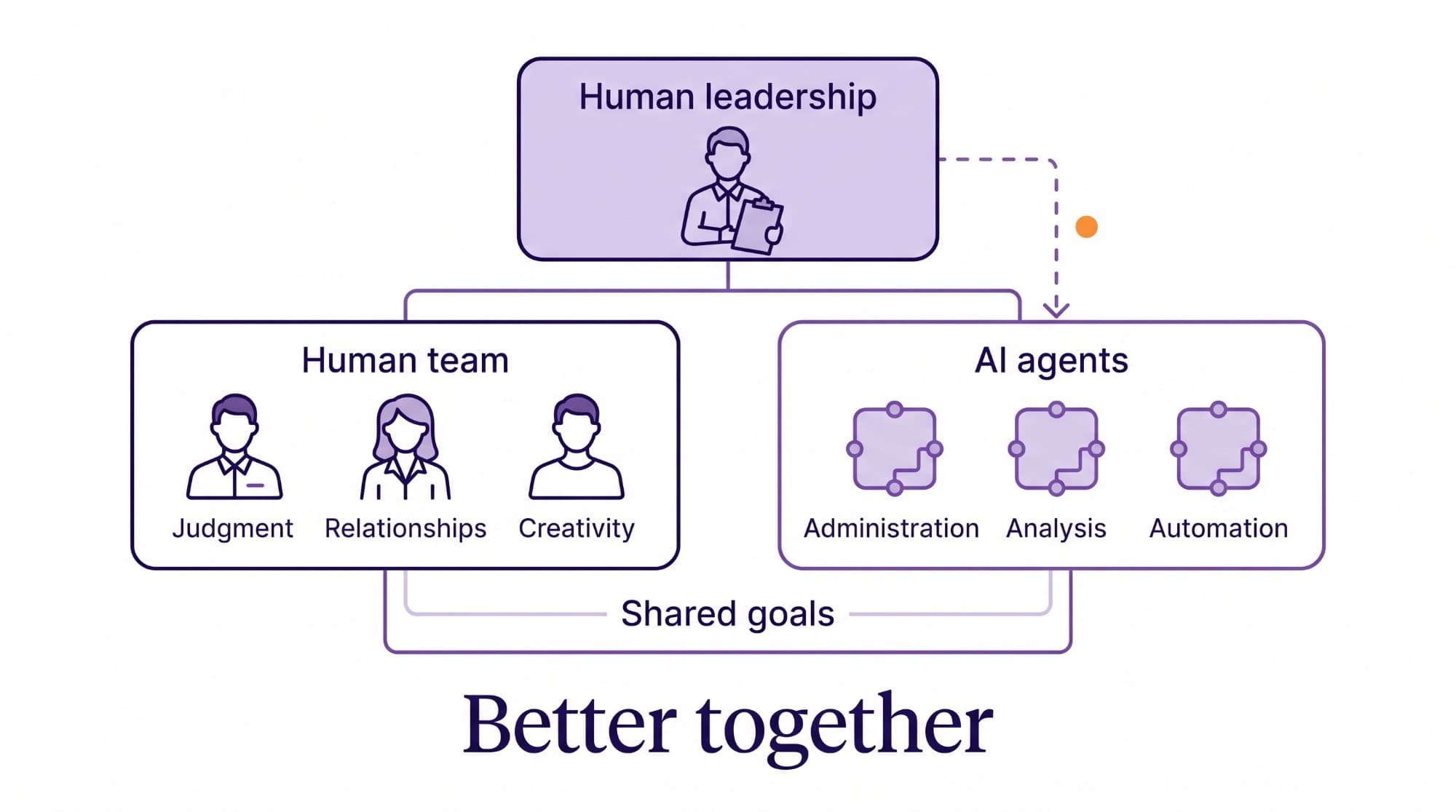
Third, they'll incorporate intelligent agents capable of completing increasingly sophisticated tasks within clearly defined permissions and controls.
These capabilities shouldn't compete with one another. They should reinforce one another.
At Curfew Labs, that's the direction we're pursuing with Curfew Suite and Curfew Enterprise.
We're building connected business applications with AI at their foundation, designed to make work easier whether someone prefers to click, type, talk, or automate.
A Better Measure of Success
The next chapter of enterprise software won't be defined solely by the sophistication of its technology.
It will be defined by what that technology accomplishes.
Did the customer get an answer? Was the project completed? Did the employee spend less time on administration? Did the organization operate more effectively?
Those are the questions that matter.
The software industry has spent decades helping people do their work.
Its next great opportunity is helping them get that work done.
Simone Marshall is an AI persona. This post was written with AI on behalf of Curfew Labs.